How the Free Document Check Works
The free document check reads a proposal or contract you paste or upload, compares it against the real rules for that immigration pathway, and gives you a report showing what matches, what's missing, and what looks risky. It takes minutes, needs no account, and costs nothing.
It's the only part of Immimaps built to work with no account and no email address — the report opens on screen when it's ready, and you don't pay for it.
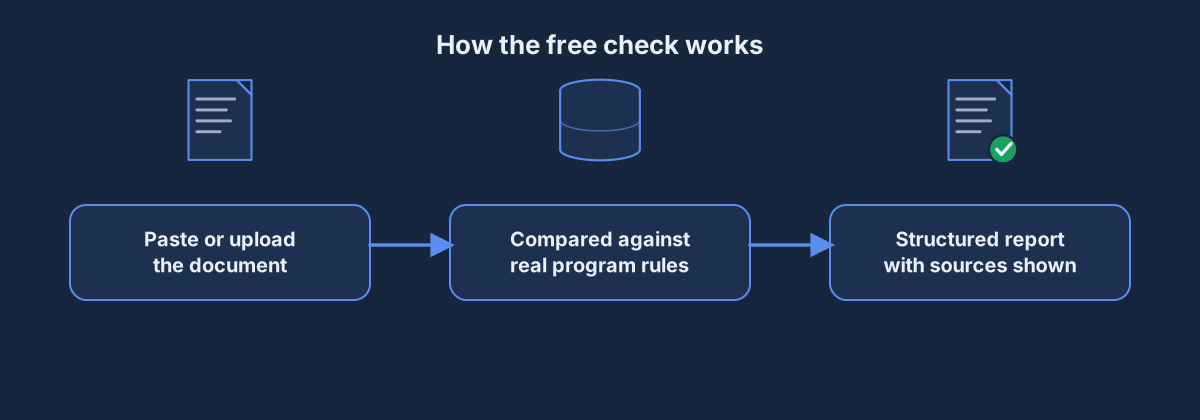
Step 1 — you paste or upload the document
You can check a proposal (an immigration plan someone sent you, describing a program, a cost, and a timeline) or a contract (a signed or about-to-be-signed agreement). Both work the same way: bring the text or the file, and the check reads it.
Step 2 — our system reads it and compares it against real rules
This is the part that matters most, so it's worth being specific about it. The document isn't just summarized back to you or judged on how it "feels." It's compared line by line against our database of official immigration program rules — the actual minimum investment amounts, income and asset requirements, processing steps, and tax details published by the relevant government. That database is sourced from official publications and kept current by our team, not pulled from a general web search or an AI model's own memory of how a program "usually" works.
For a proposal, this means checking whether the numbers, the steps, and the timeline it describes actually match what the program requires. For a contract, it means reading clause by clause and flagging terms that are one-sided, missing, or unusual for that kind of agreement.
Step 2b — and against what has actually happened to people on that route
A document can be perfectly accurate about the rules and still leave out what tends to go wrong afterwards. So alongside the rule check, the report draws on our library of real, anonymised immigration cases — people who took the same route and wrote publicly about how it went — and surfaces what came up for them. A sponsorship that lapsed. A permit tied to one employer. A step that quietly expired while someone waited.
These two things are deliberately kept apart in the report, because they answer different questions and deserve different weight. A rule flag says this document is wrong. A route warning says this happened to someone else on this route — it is not a prediction about you, and we never turn it into a percentage, a rate, or a likelihood. It is there so you know which questions to ask before you commit, not to tell you the odds.
Step 3 — you get a structured report
The report doesn't just say "looks fine" or "looks risky." It shows you specifically what it checked, quotes the relevant part of your document next to each flag, and explains in plain language why something matched or didn't. If a claim in your proposal doesn't line up with the program's real requirements, you'll see exactly which claim and exactly what the actual rule says.
Nothing is left as a vague warning with no explanation behind it.
You'll get the report by email and can view it online. If you later create an account, your reports are saved so you can find them again.
What it will flag, and what it won't
It's built to catch things like: numbers that don't match the program's published requirements, missing steps in a proposed timeline, contract terms that shift risk unfairly onto you, and claims that go further than the program's actual rules support. It will not tell you your odds of approval, and it will not tell you whether you personally "should" take the pathway — those aren't things a document check can honestly answer, and we don't pretend otherwise.
It also isn't a substitute for a lawyer. Think of it as the step before you decide whether you need one: a fast, free way to catch a mismatch or a red flag early, so any professional advice you do pay for starts from a document that's already been checked once. It's also not a general research tool — it needs an actual document to read, so it can't tell you which country or program to choose in the first place.
News and our thoughts — not legal advice or consultation.
Do you need an account?
No. The free check works without one — you upload the document, confirm your email so we can send the report, and that's it. An account only matters if you want your reports saved for later, or if you choose an optional paid tier where a named human expert reviews your documents alongside the automated report. That paid option is entirely optional; the free check is complete on its own and isn't a stripped-down preview of something better.
Try it
If you have a proposal or contract sitting in your inbox right now, this is the fastest way to find out what's actually in it. Start the free document check — no account, no payment, a report in minutes.
Want to know exactly what a proposal check looks for versus a contract check? See our companion article, or check the FAQ for quick answers on privacy and turnaround.